New arrivals at the park: 20 scarlet ibises from Holland
A new aviary for Rojo and the new individuals
A new aviary for Rojo and the new individuals
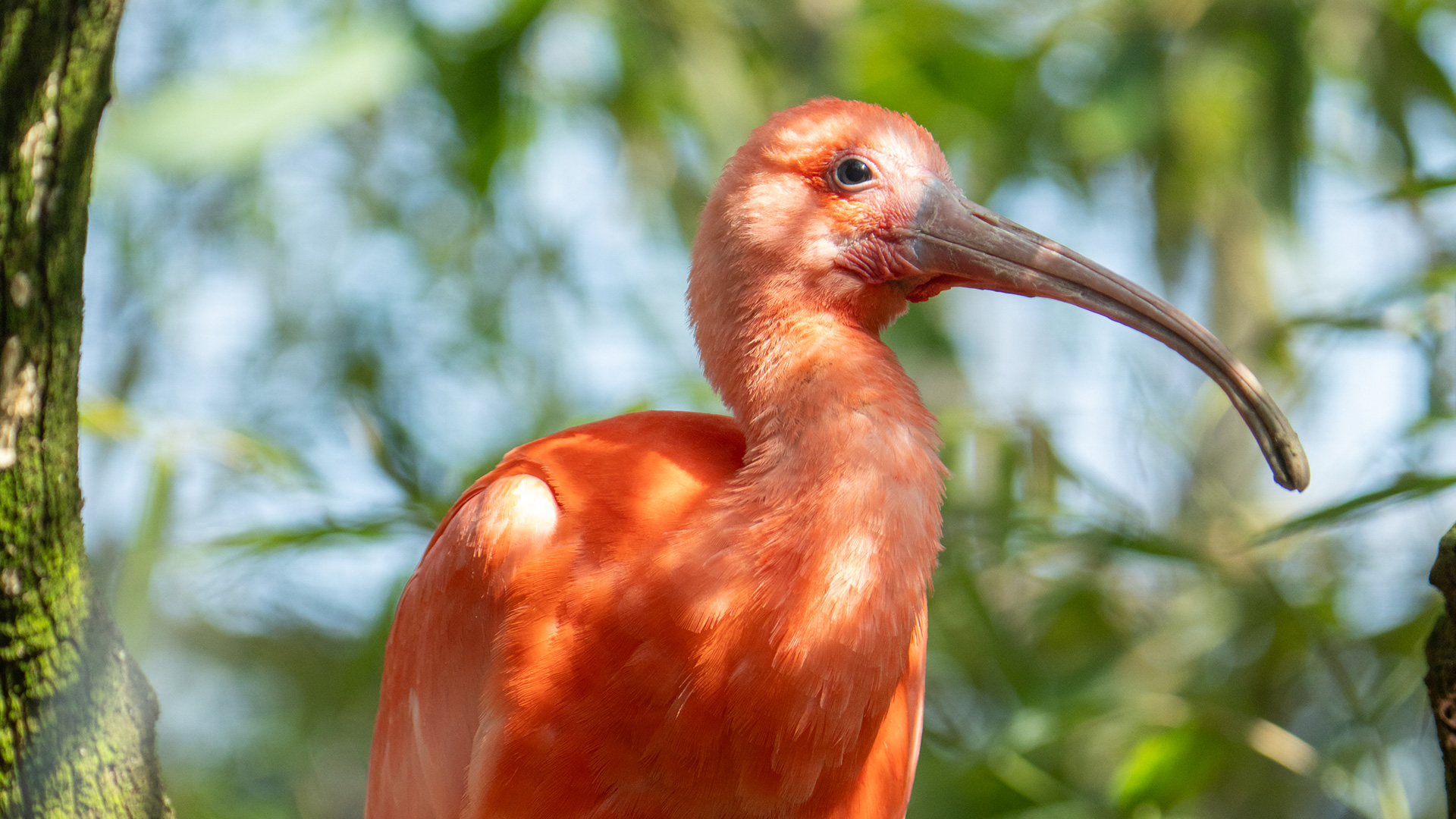
HE HAD LOST HIS MATE AT THE END OF SEPTEMBER: 20 SCARLET IBIS ARRIVED FROM THE NETHERLANDS FOR ROJO.
He was left alone at the end of September when his longtime companion passed away. The staff immediately took action to ensure a suitable group for his gregarious species. Within four weeks, 20 scarlet ibises landed at Natura Viva Park, and—after routine checks—Rojo was able to resume his social life, once again enjoying the company of his fellow ibises in one of the largest groups in Italy. All twenty-one of them took up residence in a large new double-decker aviary, spanning over 200 square meters. This aviary allows visitors to observe the most elegant (and flamboyant) of all ibis species, both on the ground, among pools of water and wetlands, and high up among foliage and tree trunks. An explosion of unmistakable color, the same characteristic that characterizes the coastal wetlands of eastern South America where the scarlet ibis lives in the wild, among the most endangered ecosystems on the planet. Consider that since 1970, over 20% of the world's remaining wetlands have been lost, while approximately 25% of those remaining are in poor ecological condition.
Coming from Gaia Zoo in Kerkrade (Netherlands), the new group was welcomed without any difficulty, so much so that they no longer showed any differences between the regular residents and the new arrivals. During their first few days in their new home, the 21 birds preferred to acclimatize by observing from above, only later beginning to explore the ground. The staff hopes that they will also find the nesting nursery comfortable, where they can lay their eggs, raise chicks, and contribute to the conservation of the species, listed on the International Union for Conservation of Nature's Red List. "The progressive loss of habitat," explains Caterina Spiezio, Head of Animal Research at the Zoom Foundation, "affects the entire range of the scarlet ibis, which extends from the Caribbean islands of Trinidad and Tobago (where this bird is featured on the national coat of arms) to southern Brazil. It affects mangrove forests, coastal lagoons, estuaries, and salt marshes. All those key wetlands, where the specimens can search for food by probing mud and shallow waters with their unmistakable curved beaks in search of small crustaceans, aquatic insects, and mollusks, building nests among the branches, and leading a gregarious life within their social groups. For this species, too, the main problem is the conversion of land by human activities, aggravated by a climate crisis that shows no signs of reversing its trend." With the definitive arrival of the cold season, Rojo and the other scarlet ibises at the Natura Viva park will be able to choose to stay in the warmth of their internal enclosures or go out into the large aviary for real sunbathing.