Elka has arrived!
Elka the Carpathian lynx pairs with male Vilcan: potential offspring in the reintroduction project
Elka the Carpathian lynx pairs with male Vilcan: potential offspring in the reintroduction project
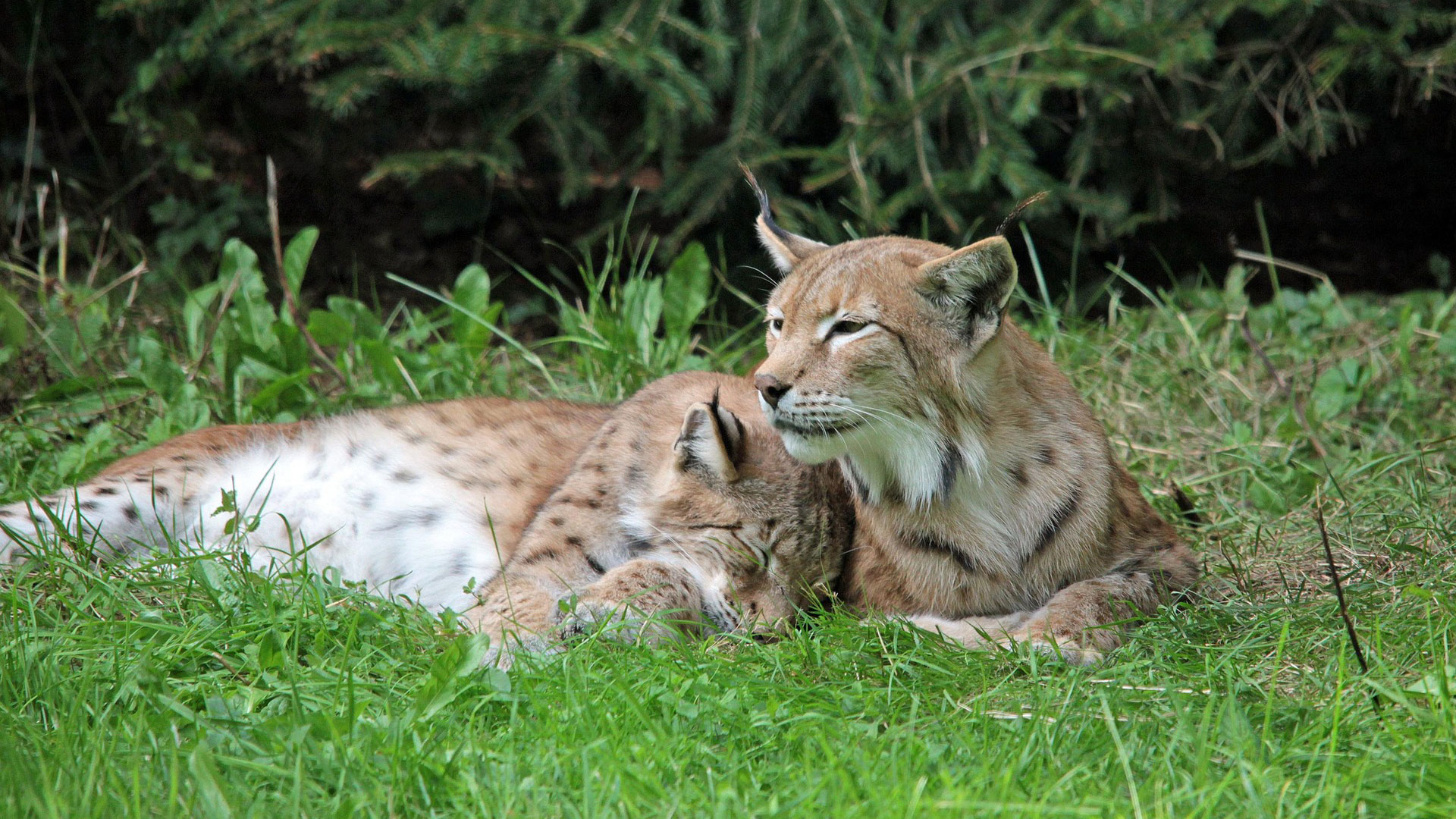
Elka, the female Carpathian lynx already in a stable relationship with Vilcan, has arrived at Parco Natura Viva. Their enclosure has doubled in size, now covering nearly 800 square meters of oak trees, rocks, and undergrowth. It's a perfect exhibit to await her new offspring, destined to be part of the Eurasian lynx reintroduction project. Originally from the Jahlava Zoological Park in the Czech Republic, Elka has slowly settled in, and Vilcan has welcomed her warmly. Both spend these days patrolling their territory and resting among the branches, a perfect example of camouflage among the autumn leaves. "The expansion of the enclosure, which already had all the necessary characteristics to house this species," explains Camillo Sandri, zoological director of Parco Natura Viva, "now guarantees a true antechamber for adaptation to the natural environment. And the goal of the reintroduction project, carried out thanks to the contribution of European zoos, is to succeed in connecting small existing populations and creating a sustainable population of Carpathian lynx." This is the third largest predator after the bear and the wolf, holding the record for elusiveness and, in our country, still considered the rarest of all mammals. Human persecution led to its extinction in Italy until the first half of the 20th century, and even today, the lynx remains present in small relict populations for which effective conservation measures are necessary. With their spotted coats and distinctive long tufts on the tips of their ears, Elka and Vilcan are distinguishable only to the attentive eye, especially due to the varying dark spots on their brown fur. Both very shy, they prefer to move at dusk or at night, while during the day they never lose sight of visitors. In the wild, despite their size no larger than a medium-sized dog, the lynx's presence ensures a fundamental ecological role in controlling ungulates. One of its favorite prey is roe deer, but it also eats red deer, chamois, or reindeer. Only an integrated conservation strategy combining controlled-environment breeding and strengthening wild populations will allow this species to repopulate Europe's forests.