
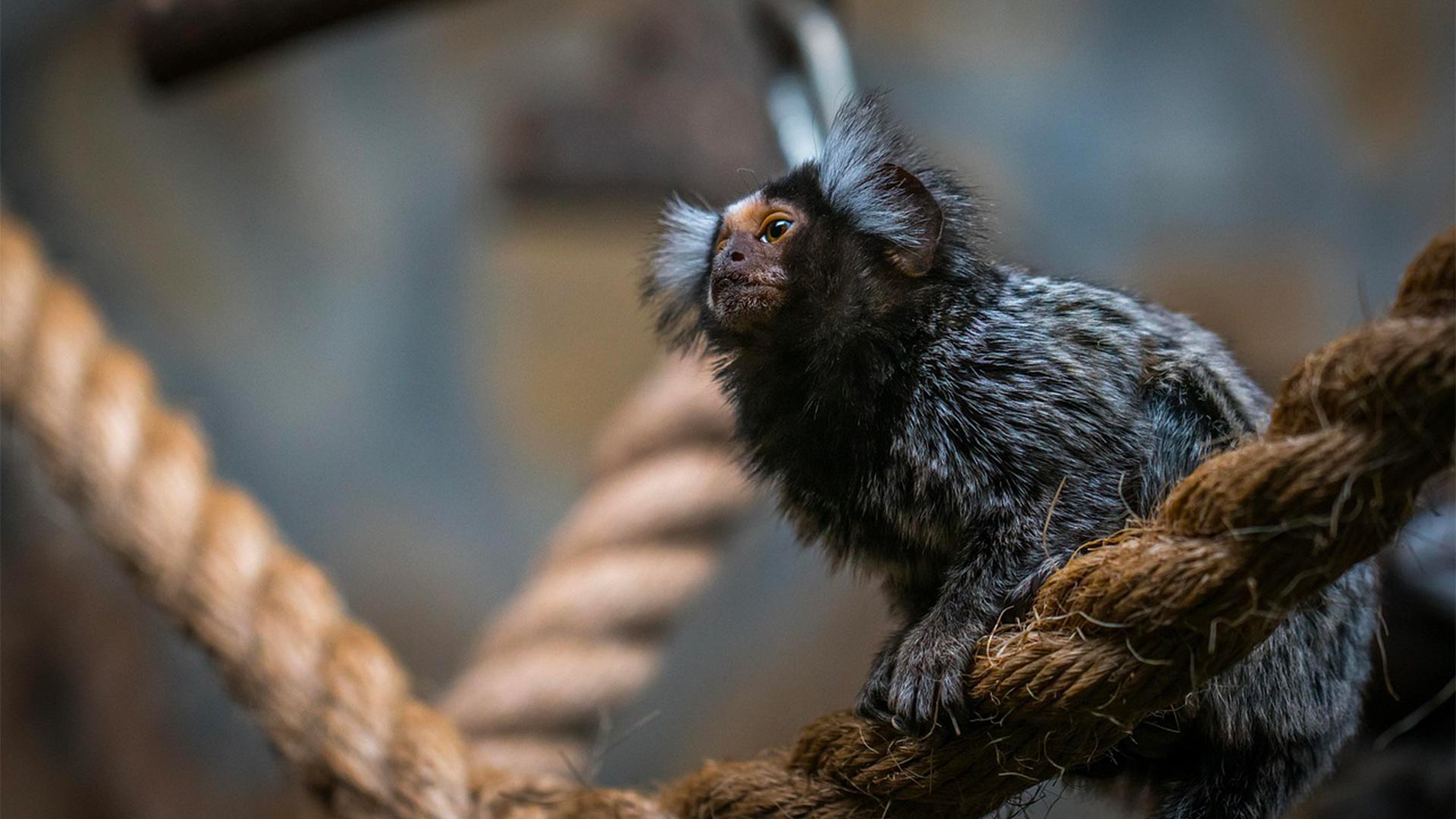
Criminal trial concluded, happy ending for Fortunato
After more than ten years, the legal case of Fortunato, the tufted marmoset officially entrusted to the Natura Viva park, has come to an end.
After more than ten years, the legal case of Fortunato, the tufted marmoset officially entrusted to the Natura Viva park, has come to an end.
After more than ten years, the legal case involving Fortunato, the tufted marmoset who arrived at Natura Viva Park with Striscia la Notizia, has come to a close. With the conclusion of the criminal trial in recent days, the judge authorized his official inclusion in the zoological collection and in European conservation programs for the species. The staff who supported him throughout his long rehabilitation process are extremely satisfied, thanks to which Fortunato has now lived for years in the company of his longtime "friend" Lino, originally from the Netherlands and with a similar background. He is one of the smallest monkeys in the wild, measuring approximately 40 centimeters in length, and is therefore highly vulnerable to illegal wildlife trafficking.
"Fortunato came to us after law enforcement stopped the car he was traveling in on the highway, undocumented and in conditions unsuitable for his species," recalls Camillo Sandri, zoological director of Natura Viva park. "He was very young, but already lacked the individual and social skills necessary to live with other monkeys. This is a significant problem for a tufted marmoset, which lives in the forests of Brazil in groups of two to ten individuals. We then contacted the AAP – Rescue Center for Exotic Animals, a Dutch rescue center accredited for the recovery of primates. So, within six months, Lino arrived, a member of his species and also with a history of illegal human detention."
A long rehabilitation process and a specially constructed ward for the two marmosets—arboreal primates that rely on trees and branches to carry out most of their daily activities—were the key elements that allowed Fortunato and Lino to rely on each other and become inseparable, overcoming the experiences that have marked them for life. "A happy ending that unfortunately doesn't happen to hundreds of other specimens removed from the wild every year and destined for the illegal pet trade," concludes Sandri. "This pressure, for the tufted marmoset, adds to the other threats present in its natural range. Deforestation, fragmentation of Brazilian forests, and urban sprawl make the survival of this species even more fragile."