The rhinoceros returns to Natura Viva Park
Ayo has arrived: a long journey from Sweden to Italy
Ayo has arrived: a long journey from Sweden to Italy
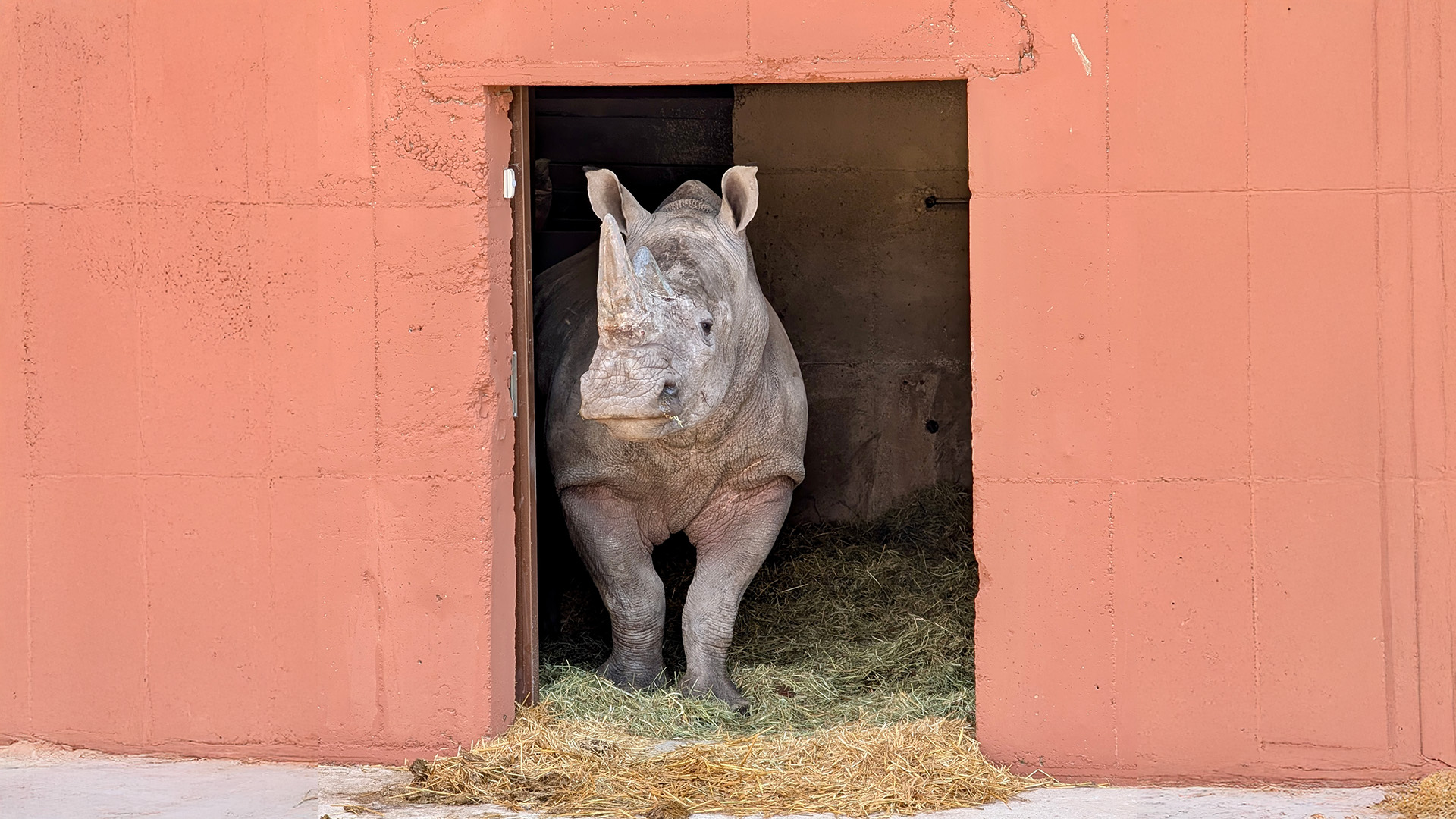
A 1,800-kilometer journey from Sweden to Italy, aboard a ferry across the Baltic Sea and then southwest to Natura Viva Park on Lake Garda. Ayo, a young three-year-old southern white rhino, reached his new home late Friday evening, while keepers and veterinarians awaited him at the stable door. An emotion that will be repeated in a few weeks, when the second young rhino arrives from France, destined to share Ayo's habitat on the African plains of the Verona park, which also hosts giraffes, saber-horned oryx, and Nile lechwe. This marks a grand return to Natura Viva Park, following the passing of Toby in 2021, Europe's oldest rhino at fifty-four, and Benno, who passed away in August last year at the age of 44.
"Ayo traveled for over 48 hours in a large crate on a truck," explains Camillo Sandri, zoological director of Natura Viva park. "Upon arrival at the Safari, a forklift transported the crate to the door of his stable, and Ayo calmly stepped out to settle in among the straw in his indoor enclosure. Now, after the first few days of acclimation, the young rhino is also beginning to explore his outdoor paddock, under the curious gaze of the giraffes. Then, once he has explored these first areas, he will access his habitat, enriched with large logs to move and a muddy area where he can roll and splash." This return represents a fundamental step in the European conservation program for the species, coordinated by the European Association of Zoos and Aquariums (EAZA), with the aim of ensuring genetically sustainable populations in a controlled environment and protecting one of the "big five," still threatened by poaching for its horn. Despite signs of recovery for the southern subspecies, 352 rhinos were killed in South Africa for illegal trafficking in this animal's body parts in 2025 alone, or nearly one per day. This is why the Natura Viva Park Foundation is supporting targeted rhino safety and monitoring efforts in Hluhluwe-iMfolozi National Park, strengthening the fight against poaching and contributing to the growth of wild populations. This commitment is being carried out in conjunction with Save the Rhino in areas where pressure on this species is greatest and conservation requires concrete action.
"Ayo is starting to enjoy the Italian sunshine," Sandri concludes, "but in the meantime, in the internal departments, preparations are underway for his new companion's stable. He, too, is very young, and will share a gradual growth path with him, including competitive trials, to test their strength and become adult males capable of breeding. Because these two specimens represent part of the future of this species."