Two African protoptera have arrived
Lungfish are arriving at Natura Viva: one of only six species existing on the planet.
Lungfish are arriving at Natura Viva: one of only six species existing on the planet.
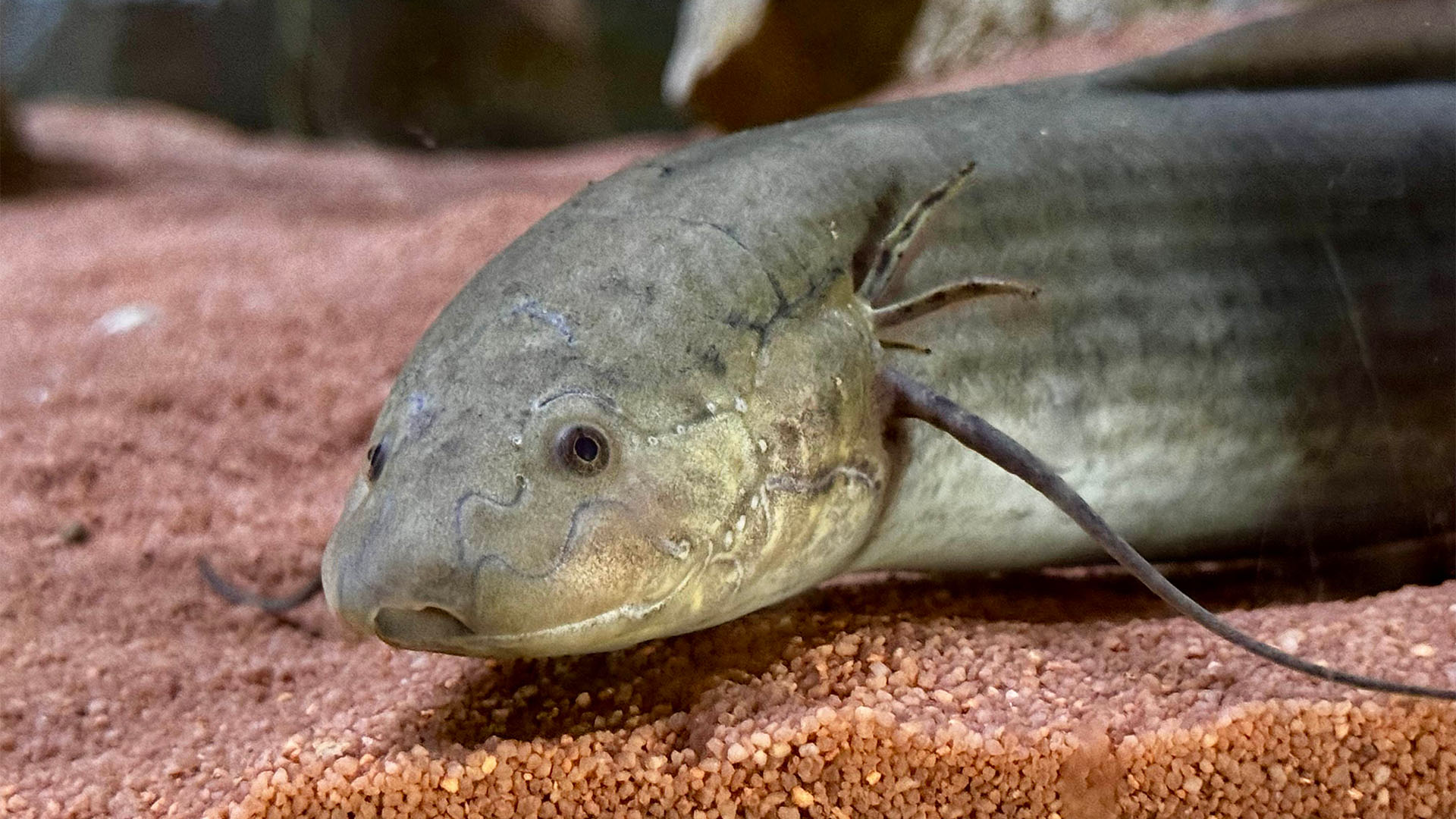
Elongated bodies, thin fins resembling small limbs, and a characteristic found in only six fish species on the planet. Equipped with both gills and lungs, two African protoptera have arrived at the Natura Viva park in Bussolengo, capable of breathing underwater and even in the absence of water for many months. This animal, carrying with it over 400 million years of evolutionary history, has found its place in the House of Dragons, the pavilion dedicated to extraordinary evolutionary phenomena such as gigantism, dwarfism, and other adaptation strategies.
"When rivers, lakes, and floodplains in sub-Saharan Africa begin to dry up during the dry season," explains Marco Benini, keeper of House of Dragons at Natura Viva Park, "the protoptera implements one of the most unique survival strategies in the animal kingdom: it burrows into the mud and creates a cocoon around itself, entering 'estivation.'" This state can last for several months, during which it continues to breathe air through its lungs while waiting for the return of water with the rains." From the sandy bottom, the two specimens live in an aquarium rich in vegetation, which allows them to rest among the branches or lean on the side rocks to easily surface to breathe. They are slow-swimming animals, with sinuous movements reminiscent of an eel, aided by their thin, threadlike fins, which they use as small supports to weave between the seabed and vegetation. Even once they've surfaced, they descend just as slowly, following the undulations of their bodies until they reach the bottom.
The arrival of the two protoptera joins the already existing inhabitants of House of Dragons. Among them are the giant anaconda, giant otters, giant tortoises, and Komodo dragons, the largest lizards on Earth. Now, these unusual paths perfected by evolution are joined by a fish capable of breathing air and surviving for months without water.